
Research into organisational control over AI
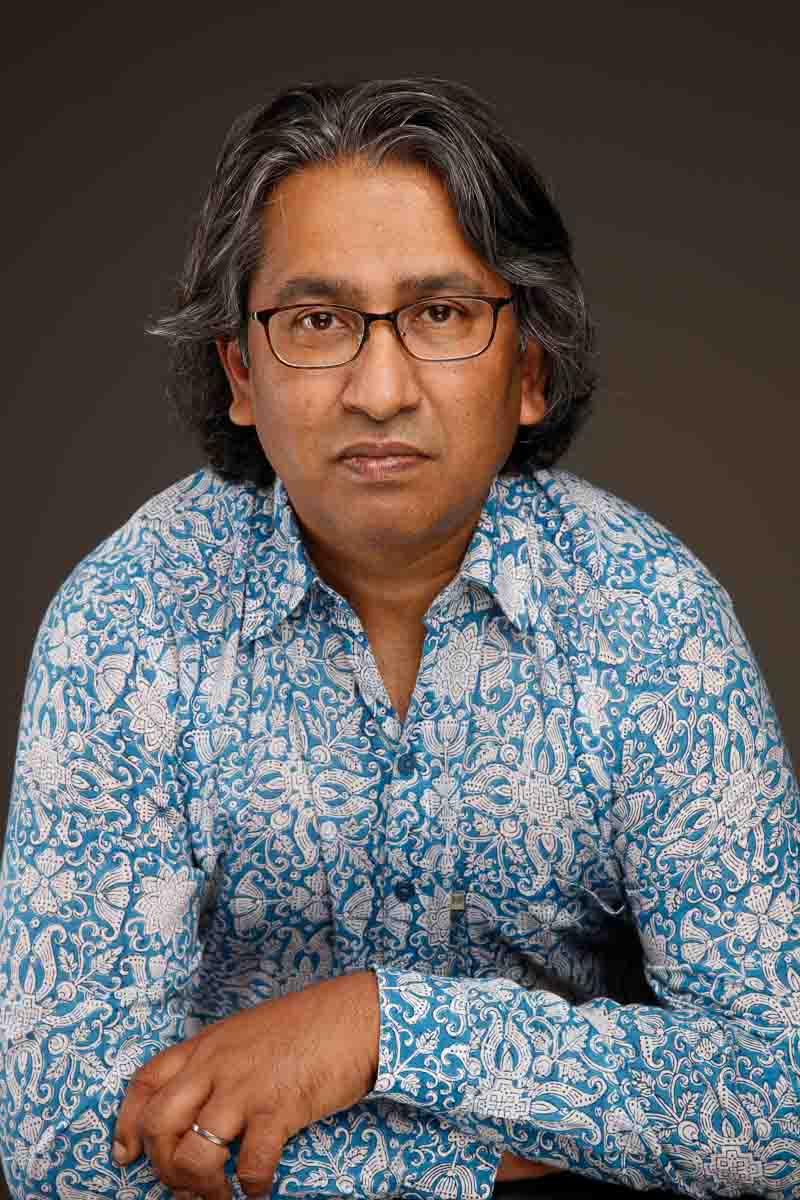
I’m Was Rahman. My research asks what it means for organisations to retain control over AI, and what changes when they use it to support decisions. This site is where I share that work, explore its implications and invite discussion of the questions it raises.
I started my career reading physics at Oxford and gaining my Masters in information systems and software engineering, followed by over 30 years working in industry and government policy. In 2019 I returned to academia to investigate the impact of AI in business, including my Doctorate in AI governance and ethics, and visiting positions at the philosophy faculty at Bonn and the Desirable Digitalisation collaborative research programme between Cambridge and Bonn. I bring these different perspectives to my research, focusing on where they reinforce each other, where they conflict and what we can learn by considering them together.
My doctoral research at Coventry examines fairness in AI-supported recruitment and promotion. It provides a foundation for my wider inquiry into organisational control – how things work in practice, and how we understand and explain them theoretically.
What does retaining control involve?
Keeping a person in charge does not necessarily give them control. My research looks at five connected questions about the choices organisations make, how they work, and what changes when they use AI.
My PhD explores these questions through fairness in recruitment and promotion, providing a foundation for my wider research into organisational control over AI.
By the time someone reviews an AI recommendation, earlier choices may already have limited their options. What the system is designed to achieve, which information it uses and where its thresholds are set all help shape the eventual decision.
Those choices may reflect reasonable business priorities, such as reducing costs or working faster. But the person making the final decision needs to understand which priorities have already been set and how these limit their options. They also need a way to question earlier choices when the consequences suggest those choices should change.
An organisation can sincerely commit to a principle while its targets, budgets and everyday practices pull people in another direction. A new policy does not, by itself, change those pressures or the established ways people work.
Management theory helps explain why these gaps persist, without assuming that leaders are uncaring or that their commitments are dishonest. My research draws on these explanations to understand what happens when AI enters the picture: which practices it carries forward, and whether governance changes what happens or simply shows that a process has been followed.
AI can help organisations work faster and more consistently. But deciding what to do is not always the same as applying a rule: people may need to interpret the circumstances, weigh competing concerns or recognise when an exception matters.
Human judgement is not automatically better. The question is what changes when we turn that judgement into something a computer can do. My research examines what this translation preserves, what it leaves out, and what people still need to be able to question or decide.
A manager may be responsible for a decision without being able to change the system that helped produce it. They may not know how it works, have access to the people who shaped it, or have the authority to ask for changes.
Naming someone as accountable does not resolve that gap. My research examines how responsibility connects to the practical means of exercising control, including when those means sit with another team or an outside supplier. Spotting a problem is only useful if there is a route to getting it addressed.
Before AI can use information, it has to be represented in a form the system can work with. Turning an assessment of a person into a category or score can make comparisons easier, but it can also leave out context or change the meaning of the original assessment.
That matters when we use the results to judge whether a decision is good or a process is working as intended. A measure may accurately describe what was counted without telling us everything we need to know. My research examines what is lost or changed in that translation, and what we can reasonably conclude from the data that remains.
What the research is based on
My PhD at Coventry University examines fairness in AI-supported decisions about people, particularly recruitment and promotion. It draws on 30 in-depth interviews with people working in HR, business, technology and academia.
The research found that agreeing fairness matters is not the same as agreeing what it means. People’s efforts to act fairly were shaped by commercial priorities, established practices and the information available to them. Responsibility for a decision did not necessarily come with influence over everything that shaped it.
AI adds another difficulty. Choices about what matters can become part of a system’s data, rules and thresholds, before the person making the final decision becomes involved. The thesis examines how this changes what organisations can see, question and control.
Management theory helps explain why these difficulties persist, including when people sincerely want to act differently. The work also develops two contributions: one examining how organisations can govern influence exercised earlier in a decision process, and another proposing a way to make different understandings of fairness visible.
These are research contributions, not tested solutions. The next stage includes investigating upstream practices directly and developing and testing the proposed approaches with organisations.
About me
I studied physics at Oxford, specialising in atomic and quantum physics in my final year, before completing a master’s in Information Systems Development and Management. My early career involved developing business software and helping others use software engineering methods and tools. I went on to leadership roles at Accenture, Infosys and Wipro, as well as building and running businesses. I have served as an advisor to the UK Government and UK telecoms industry, and currently sit on the CIPD AI advisory group for the UK HR profession.
That background shapes how I approach questions. I look at them from several perspectives, exploring where those perspectives reinforce each other, where they conflict, and where bringing them together reveals something we might otherwise miss. Each has something important to contribute, but none automatically takes precedence. Sometimes the result is a new understanding of something we thought we already knew.
My academic work brings these questions into conversation with management, philosophy, law and computer science. I was a Visiting Researcher at Bonn’s Center for Science & Thought from 2023 to 2025, which is jointly housed by the Philosophy and Physics faculties. From 2023 to 2024 I was a Research Fellow at “Desirable Digitalisation” a collaborative research program between the Universities of Cambridge and Bonn for “Rethinking AI for Just and Sustainable Futures”. My current academic home is Coventry University’s Faculty of Business and Law, where I am scheduled to submit my PhD in October 2026.
conversations & Collaboration
I welcome conversations with researchers and business leaders who want to explore these questions, challenge an argument or compare different ways of understanding a problem.
I am open to academic collaboration and affiliations through which I can continue to develop this work. I also share and discuss my work at academic and industry events, including private events.
Get in Touch
Business enquiries
This site focuses on my research, the ideas it develops and the questions still open to debate. Alongside my research, I run my professional practice – AI Prescience – where I apply this work to help businesses with AI control. Please contact me there for business enquiries.